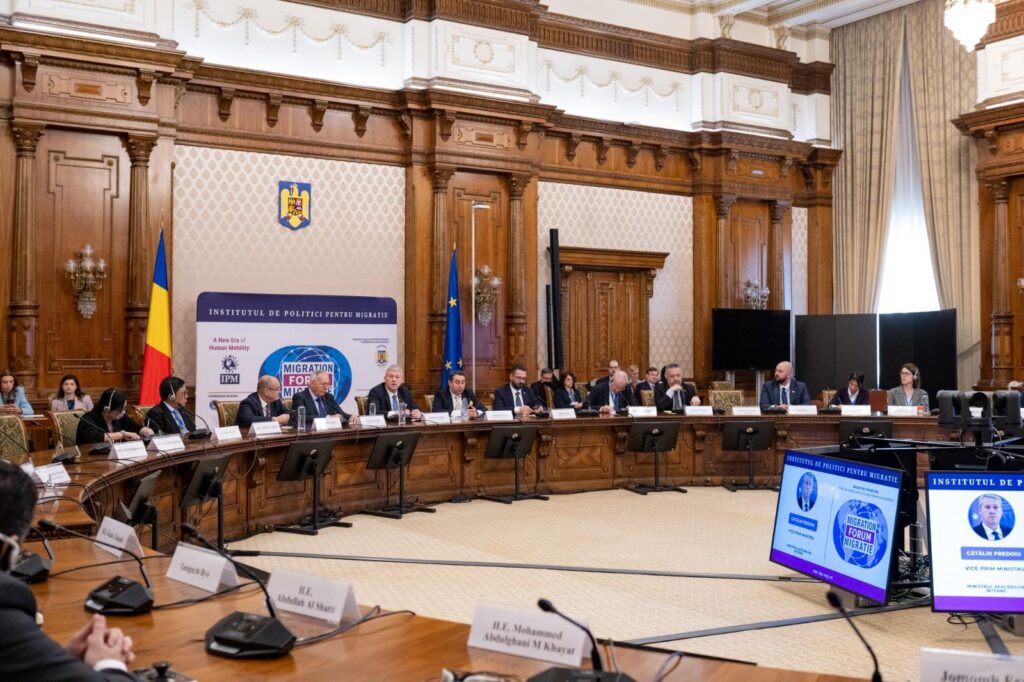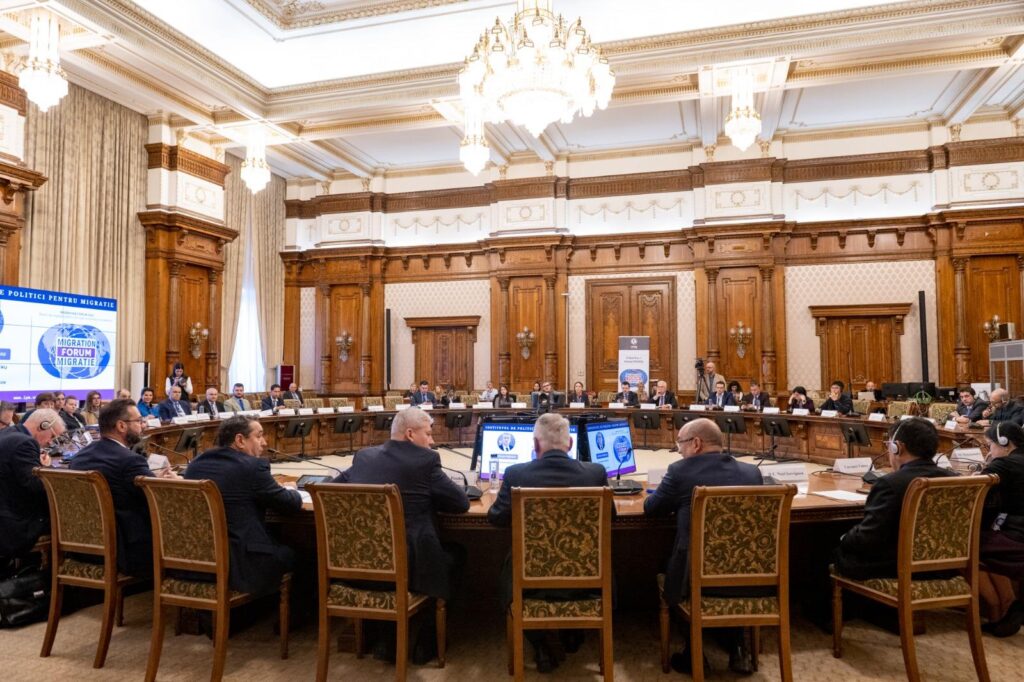
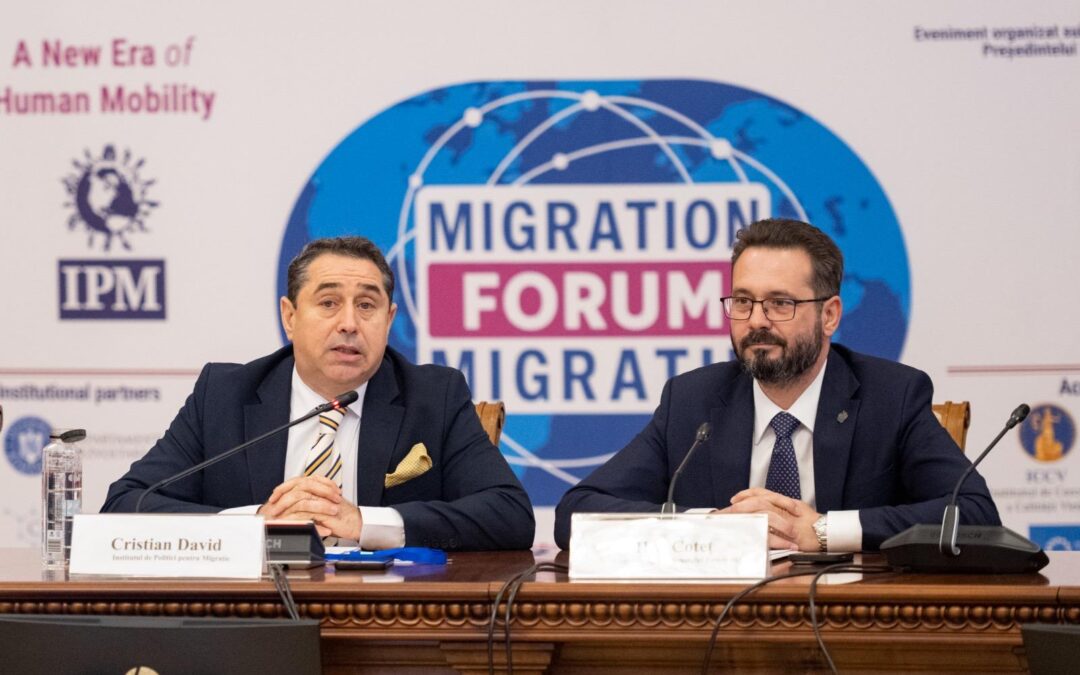
On October 29, 2025, the Migration Policy Institute organized, at the Romanian Senate, Migration Forum 2025 – "Migration Policies for a Resilient and Competitive Europe," an event held under the High Patronage of the President of the Romanian Senate. The forum brought together representatives of public institutions, academia, international organizations, and civil society, providing a framework for dialogue and reflection on the challenges and opportunities generated by human mobility in the European and global context. Translated with DeepL.com (free version)
Migration Forum 2025 a fost conceput ca o platformă de analiză strategică, menită să faciliteze schimbul de idei între experți și factori de decizie, într-un moment în care migrația influențează profund dinamica demografică, economică și de securitate a Europei. Dezbaterile au evidențiat necesitatea unor politici publice coerente, fundamentate pe date și orientate către nevoile reale ale societății.
Topics Covered
The forum agenda was structured into four thematic sessions. The first session was dedicated to migration trends and challenges in the European Union, in the context of the implementation of the European Pact on Migration. Discussions analyzed the evolution of migration flows at the regional level, pressures on border states, and the impact of European decisions on national policies. Particular emphasis was placed on the need for coordination between Member States and the role of European solidarity in managing human mobility.
The second session explored the relationship between migration, demographic resilience, and the labor market, based on the demographic realities of Romania and Central and Eastern Europe. Participants discussed the decline in the working-age population, demographic aging, and labor shortages, highlighting migration as a potential resource for balancing these imbalances, provided that effective and sustainable integration policies are in place.
The third session addressed migration from the perspective of economic competitiveness and resilience, analyzing how labor mobility influences productivity, innovation, and the ability of economies to adapt to external shocks. Discussions highlighted the importance of linking migration policies with economic and development strategies in order to transform migration into a factor for growth and stability.
The last session was dedicated to the geopolitical dimension of migration, with a focus on forced migration generated by armed conflicts, political persecution, or climate change, but also on new forms of mobility that have emerged in the context of digitalization. Participants analyzed the phenomenon of migration being used as a tool for geopolitical pressure and its implications for regional and international security.
The discussions highlighted the complex and interconnected nature of migration, emphasizing that human mobility is both a challenge and a resource that can contribute to development, innovation, and social cohesion.
A key message of the forum was the importance of putting people at the center of migration policies. Participants highlighted the need for solutions that combine security, sustainability, and economic prosperity with respect for fundamental rights and human dignity.
Through Migration Forum 2025, the Migration Policy Institute is consolidating its role as a facilitator of cross-sectoral dialogue and aims to develop this format as a benchmark event for the analysis and formulation of migration policies in Romania, in close connection with European priorities and global developments.
The Migration Policy Institute would like to thank all participants, institutional partners, and experts who contributed to the success of the forum and to shaping a relevant and solution-oriented dialogue. Their involvement confirms the need for a constant framework for cooperation and reflection in the field of migration, in a Europe that is constantly changing.